What Is Lead Management? A Plain Guide for Small Businesses in India
What is lead management, in plain words? The stages every enquiry passes through, the five places small businesses lose leads, and a simple setup you can run this month.
By DigiPix Flow team
In this guide
A buyer fills in your Meta ad form at 21:40. Another sends an IndiaMART enquiry over lunch. A third messages your business number on WhatsApp asking for a price list. By Friday, one has been called twice by two different people, one got a reply three days late, and nobody is sure whether the third was ever answered. That gap between receiving enquiries and doing something useful with them is exactly what lead management is for.
This guide answers what is lead management in plain terms, walks through the stages every lead passes through, shows where small businesses usually lose leads, and gives you a simple setup you can put in place this month, with or without software.
What is lead management?
Lead management is the process of capturing enquiries from every source, recording them in one place, assigning each one to a person, following up until the buyer decides, and learning from the result. A lead is anyone who has shown interest in buying from you: a form fill, a phone call, a WhatsApp message, a walk-in or an enquiry on a marketplace.
It is not only software. A shop owner with a register, a notebook of callbacks and a rule that every enquiry is returned the same day is doing lead management. An enquiry management system makes it faster, and much harder to get wrong, once enquiries arrive from several places at once.
Lead management vs lead generation vs CRM
These three terms get mixed up constantly. They are related, but they answer different questions:
| Term | What it covers | The question it answers |
|---|---|---|
| Lead generation | Ads, search, marketplaces, events, word of mouth | How do we get more enquiries? |
| Lead management | Capture, ownership, follow-up, qualification, outcome | What happens to each enquiry after it arrives? |
| CRM | The software that stores leads, contacts, deals and conversations | Where is all of this recorded? |
Most small businesses spend heavily on the first row and very little on the second. That is usually backwards. Doubling ad spend doubles the enquiries you might mishandle. Fixing lead management improves the return on the enquiries you are already paying for.
The six stages of lead management
Whatever you sell, whether flats, courses, steel pipes or marketing retainers, every lead moves through roughly the same six stages:
- Capture. The enquiry is recorded with the person's name, phone number, what they asked about and where they came from: a Facebook ad, your website, IndiaMART or a walk-in.
- Assignment. One named person becomes responsible for the lead. Not "the sales team". One person.
- First contact. The owner calls or messages the buyer, ideally within minutes during working hours.
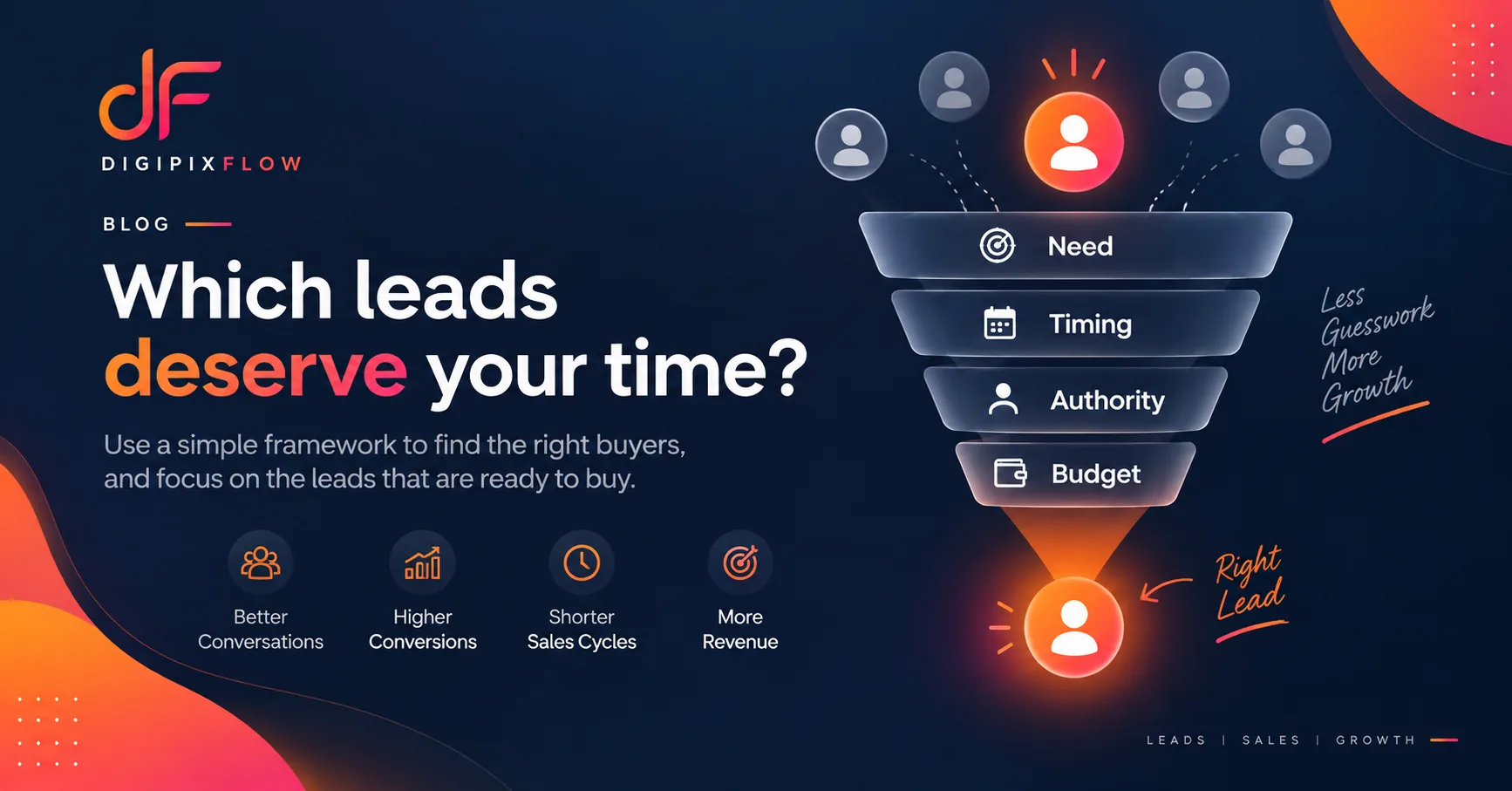
- Qualification. A short conversation to check need, timing, the decision-maker and budget. Our guide on how to qualify leads covers the exact questions.
- Follow-up and nurturing. Buyers who aren't ready today get planned follow-ups, useful information and a reason to come back to you rather than a competitor.
- Outcome. The lead becomes a deal and then a customer, or it is closed with a recorded reason: not a fit, bought elsewhere, no budget or no response.
The last stage matters more than it looks. A lead with no outcome stays in the list forever, making the numbers meaningless and hiding the leads that still need work. For a step-by-step version with rules for each stage, see our lead management process guide.
Why small businesses lose leads
When owners say "the leads are poor quality", the leads are often fine. They were handled poorly. Five problems come up again and again.
1. Enquiries are scattered
Meta leads sit in Ads Manager, IndiaMART enquiries in the seller panel, website forms in someone's inbox and WhatsApp chats on three different phones. Nobody sees the whole picture, so nobody notices what is missing: that is lead leakage. We wrote about this in Lead Leakage: Your Leads Aren't Lost. They're Just Scattered.
2. Nobody owns the lead
A lead that belongs to "everyone" belongs to no one. Either two reps call the same buyer, or both assume the other one already did.
3. The first reply is slow
Buyers who enquire online often contact several suppliers on the same day. The business that calls back first usually gets the first real conversation. An enquiry answered the next morning is competing with suppliers who called the same evening.
4. Follow-ups exist only in memory
"Call me after Diwali" is a promise that gets forgotten if it lives only in a rep's head or on a sticky note. Most sales need more than one conversation, so a forgotten follow-up is very often a lost sale.
5. Nothing is measured
Without a recorded source and outcome for each lead, you can't tell whether, say, the ₹40,000 you spent on Meta ads last month brought more customers than your IndiaMART listing. Budget decisions end up being made on gut feel.
A simple lead management setup for a small team
You don't need a complicated system to fix most of this. Start with four rules and make them non-negotiable:
| Rule | What it means in practice | Why it matters |
|---|---|---|
| One list | Every enquiry, from every source, goes into one list with its source recorded | You can see everything, so nothing is missed |
| One owner | Each lead is assigned to one person within minutes of arriving | Someone is accountable for the reply |
| One next step | Every open lead has a dated next action: call, WhatsApp, visit or quote | Follow-ups stop depending on memory |
| One weekly review | Thirty minutes every Monday to check overdue leads and outcomes | Problems surface while you can still fix them |
Agree your lead statuses
Agree a short list of statuses that everyone uses in the same way. For most small businesses, six is enough:
- New: arrived, not yet contacted
- Contacted: first conversation done or attempted
- Qualified: real need, realistic timing and budget
- Nurturing: interested, but not ready yet
- Converted: became a deal or a customer
- Closed, lost: with a reason recorded
Set a response target
Write down how quickly a new lead should be contacted. For example: within 15 minutes between 10:00 and 19:00 IST, and first thing the next morning for leads that arrive at night. The exact number matters less than having one and checking it every week.
Record the source of every lead
Source is the one field you will wish you had recorded from day one. It tells you which channels bring buyers, not just enquiries, and it is what you will use when deciding where next month's budget goes.
Spreadsheet or CRM?
A shared spreadsheet can work when you receive a handful of leads a week from one or two sources and one person handles them all. It starts to break when:
- leads arrive from three or more sources and someone has to copy them in by hand
- more than one person follows up, and you need to know who called whom and when
- follow-ups are missed because nothing reminds anyone
- you want to know which source produces customers, not just enquiries
- someone leaves, and their WhatsApp chats and notes leave with them
At that point, a CRM that collects leads automatically, assigns them and reminds people to follow up will usually save more time than it takes to set up.
How DigiPix Flow approaches lead management
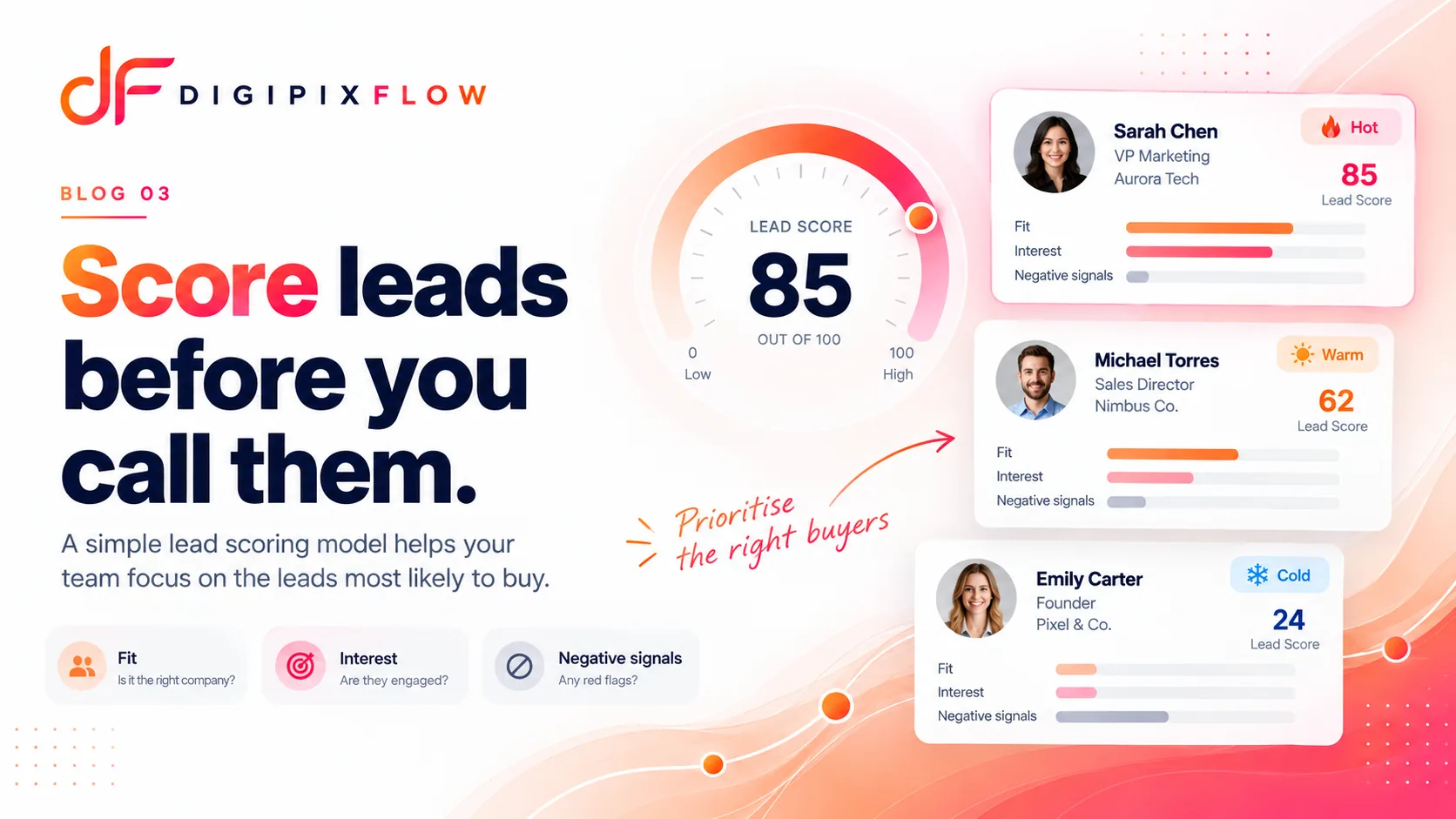
DigiPix Flow's lead inbox is built around the four rules above. Leads from Meta Lead Ads, Google Ads lead forms, IndiaMART, website forms, the API and CSV imports land in one list with their source. New leads are checked for duplicates by email and phone, scored, and given an owner by your assignment rules. Response timers raise an alert when a lead waits too long, and follow-up reminders keep every next step on the record.
Start with the leads you already have
Lead management is not a big-company process. It is the habit of making sure every enquiry has a place, an owner, a next step and an outcome. Put those four in place and you will often find more sales in the leads you already have, before you spend another rupee on ads.
Frequently asked questions
What is lead management in simple words?
Lead management is how a business handles every enquiry from the moment it arrives until the buyer says yes or no. It covers recording the lead, giving it to one person, following up, checking whether the buyer is a good fit and recording the result, so that no enquiry is forgotten.
What are the stages of lead management?
The usual stages are capture, assignment, first contact, qualification, follow-up and outcome. Every lead should end in a clear outcome: converted into a deal or customer, or closed with a reason such as not a fit, bought elsewhere or no response.
What is the difference between lead management and lead generation?
Lead generation brings enquiries in, through ads, marketplaces, search and word of mouth. Lead management is everything that happens after an enquiry arrives: recording it, replying, qualifying and following up until there is an outcome. Good lead management gets more customers from the same number of leads.
Do small businesses need lead management software?
Not always. A shared spreadsheet works with a few leads a week from one source. Once leads arrive from several channels, more than one person follows up, or follow-ups start getting missed, a CRM that collects leads automatically and reminds people is usually worth it.
What is the most important part of lead management?
Ownership. Every lead needs one named person responsible for replying and following up. When a lead belongs to the whole team, it is easy for everyone to assume someone else has called. Clear ownership also makes response times and outcomes measurable.
How quickly should a new lead be contacted?
As quickly as your team can manage during working hours, ideally within minutes. Buyers who enquire online often contact several businesses on the same day, and the first to reply usually gets the first real conversation. Set a target, such as 15 minutes, and check it every week.
Put this guide into practice
See qualification questions, lead scoring and follow-up built into one workspace, using your own lead sources.