How to Qualify Leads: A Simple Framework for Small Sales Teams
How to qualify leads with a simple four-question framework, ready-to-use qualification questions and a hot, warm and cold table for deciding which leads deserve your team's time.
By DigiPix Flow team · September 2026 guides, part 1 of 3
In this guide
Your team has 200 new leads this month and time for maybe 80 good conversations. Which 80? If you don't know how to qualify leads, the answer is usually "whoever came in most recently" or "whoever picked up the phone". That's how good buyers get ignored while reps spend an hour with someone who was never going to buy.
This guide gives you a simple lead qualification framework, the exact questions to ask, and a way to sort every lead into hot, warm, cold or not a fit.
What is lead qualification?
Lead qualification is the process of checking whether a new lead matches your ideal customer and is ready to buy, before your team invests serious time in them. A qualified lead has a real need you can solve, a realistic timeline, access to the decision-maker and a budget that fits your offer.
Put simply: qualification is how you decide who gets your team's best hours.
Why qualifying leads matters more as you grow
When you get ten leads a week, you can call everyone properly. At a hundred a week, you can't. Without a way to qualify leads, three things happen:
- Reps chase the loudest leads, not the best ones. The person who calls three times gets attention. The serious buyer who filled in one form and waited does not.
- Good leads wait too long. Time spent on poor-fit leads is time taken away from buyers who were ready.
- Forecasts become guesswork. If "lead" means everything from a student doing research to a buyer with a signed budget, your pipeline numbers mean very little.
The 4-question lead qualification framework
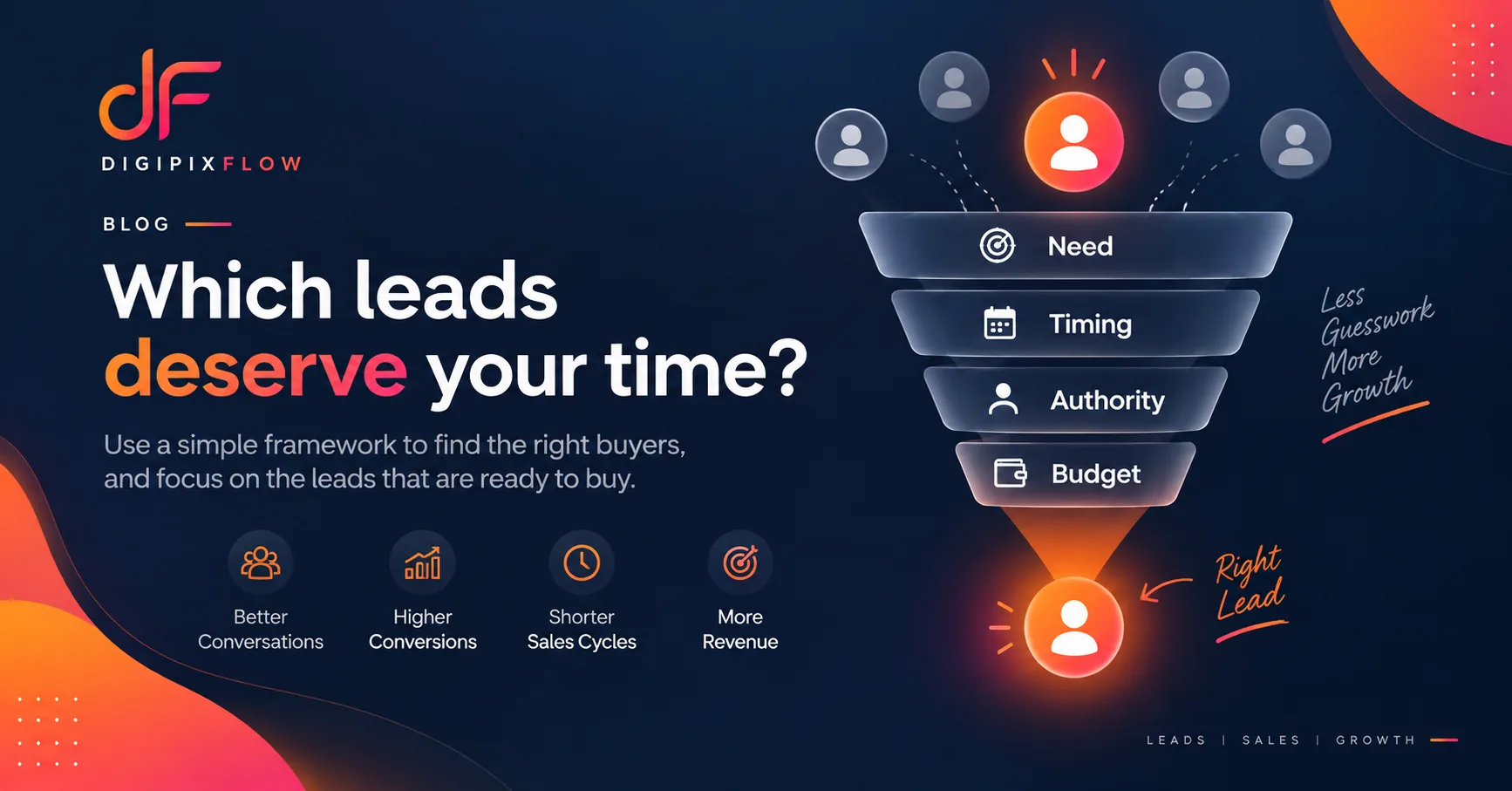
You may have heard of BANT, which stands for Budget, Authority, Need and Timeline. It's one of the oldest qualification frameworks and still useful. For small teams, we suggest asking the same four things in a more natural order, starting with need. Buyers are happy to talk about their problem. They are much less comfortable being asked about budget in the first minute.
1. Need: Do they have a problem you solve?
This is the most important question. Without a real need, nothing else matters. Ask:
- "What made you enquire today?"
- "What are you using right now, and what's not working about it?"
- "What would a good result look like for you?"
Qualified if: they can describe a specific problem that your product or service fixes.
2. Timing: When do they want to solve it?
A perfect-fit lead who wants to buy next year needs a different plan from one who wants to start next week. Ask:
- "When would you ideally like to get started?"
- "Is anything driving that date, such as a launch, a season or a deadline?"
Qualified if: they have a timeline within your normal sales cycle, ideally with a reason behind it.
3. Authority: Are you talking to the decision-maker?
Many enquiries come from someone researching on behalf of a boss, a partner or a family. That's fine, but you need to know it. Ask:
- "Who else will be involved in the decision?"
- "How do decisions like this usually get made on your side?"
Qualified if: you're speaking to the decision-maker, or you know who they are and how to reach them.
4. Budget: Can they afford what you offer?
Budget is easier to discuss once you've established need and timing. Rather than asking "what's your budget?", give a range and see how they react. Ask:
- "Projects like this usually fall between ₹X and ₹Y. Does that fit what you had in mind?"
- "Has a budget been set aside for this yet?"
Qualified if: your price range is realistic for them, even if they'd like it to be lower.
Sort every lead into one of four groups
Once you've asked the four questions, every lead should get a label and a next step. The label matters less than the next step. No lead should be left without one.
| Lead type | What it looks like | Next step |
|---|---|---|
| Hot | Clear need, timeline within 30 days, decision-maker involved, budget fits | Book a meeting, demo or site visit within 48 hours |
| Warm | Real need, but timing is 1–3 months away, or the decision-maker isn't involved yet | Schedule a follow-up and add them to a nurture sequence |
| Cold | Early research, no timeline, or budget unclear | Send useful information and check in monthly |
| Not a fit | Needs something you don't offer, or budget far below your range | Close politely, record the reason, and refer them elsewhere if you can |
"Not a fit" isn't a failure. Recording why a lead wasn't a fit tells marketing which campaigns attract the wrong people, and that's valuable.
Where to ask the questions
You don't have to wait for a phone call to qualify leads. Spread the questions across the whole journey:
- On the form. Add one or two questions to your website or Meta lead form, such as "When do you want to start?" or a budget range. Keep it short. Every extra field reduces form submissions.
- In the first message. A quick WhatsApp message can ask one friendly qualifying question before the call.
- On the first call. Cover the rest naturally in conversation. It should feel like a helpful chat, not an interrogation.
- In the CRM. Record each answer in a proper field, not in free-text notes, so leads can be filtered and reported on later.
Common lead qualification mistakes
- Asking about budget first. It puts people on the defensive. Start with their problem.
- Treating every lead the same. A warm lead needs patience. A hot lead needs speed. The same script for both wastes both.
- Not writing the answers down. If the answers stay in one rep's head, the next person to call starts from zero.
- Never disqualifying anyone. A pipeline full of "maybe" leads looks busy but closes very little.
- Qualifying once and never again. People's timelines and budgets change. Re-check warm and cold leads every few weeks.
Qualification and lead scoring work together
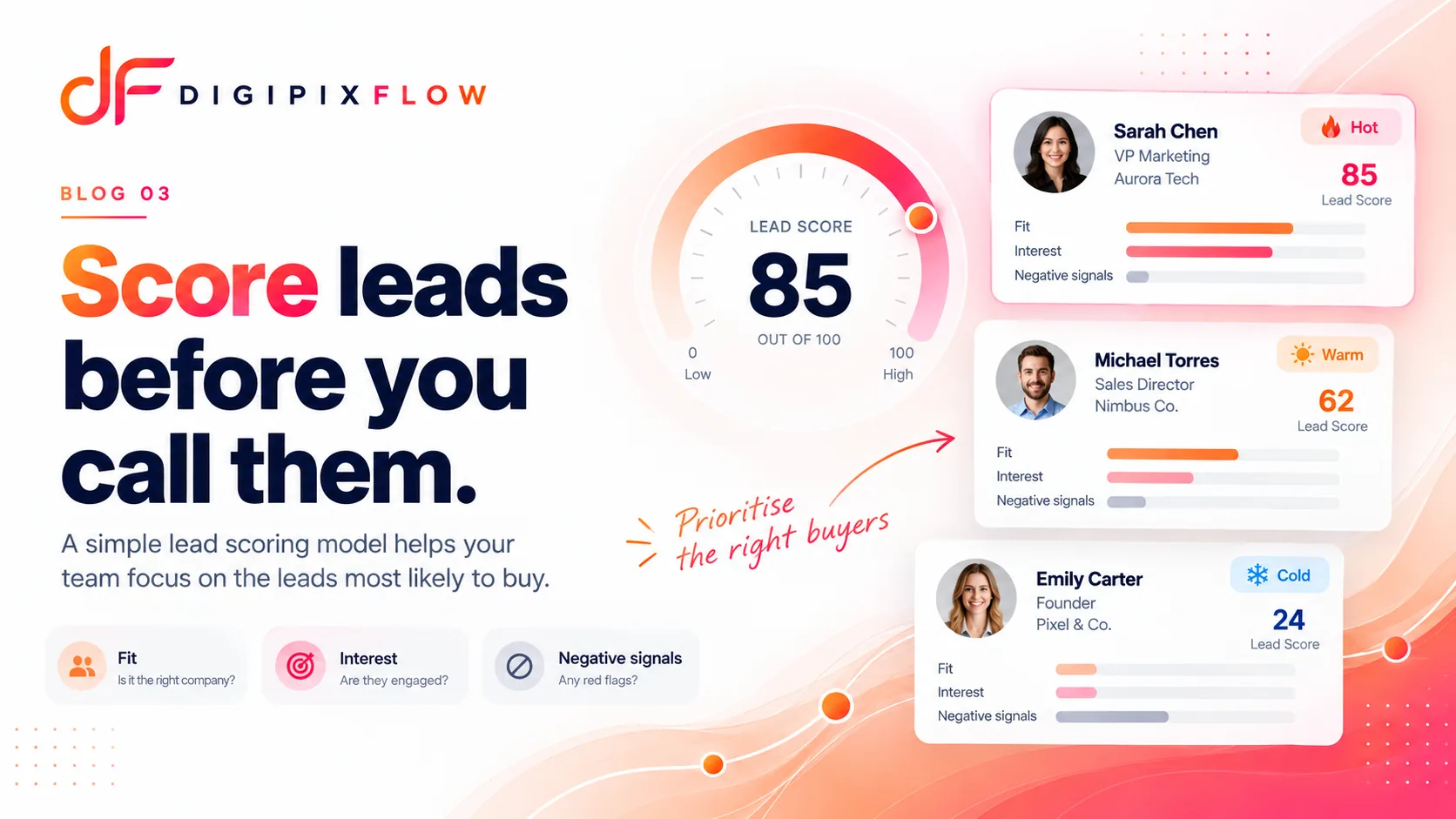
Qualification is the conversation. Lead scoring is the system that ranks leads before that conversation, using signals like a lead's source, its status and the segments it belongs to. Scoring tells your team who to call first. Qualification tells them what to do next.
How DigiPix Flow helps you qualify leads
DigiPix Flow is built to make qualification part of the everyday workflow:
- Custom fields for need, timeline, decision-maker and budget, so answers are recorded consistently and can be shown as columns in the Leads list.
- Lead scoring rules that add or take away points based on a lead's source, status and segment, so the most promising ones rise to the top.
- Assignment rules that send each lead to the right rep the moment it arrives.
- Lead 360, which shows every answer, conversation and activity on one page before the next call.
- Lost reasons, so "not a fit" leads still teach you something.
Start qualifying, not just collecting
More leads won't help if your team can't tell which ones matter. A simple four-question framework, a clear label for every lead and answers recorded in one place will do more for your sales than another campaign.
Want to see lead qualification built into your CRM? Talk to an expert and we'll set it up with your own lead sources.
Frequently asked questions
What is a qualified lead?
A qualified lead is someone who has a real need your business can solve, a realistic timeline to buy, involvement from the decision-maker and a budget that fits your price range. Qualified leads are worth your sales team's time, because they have a genuine chance of becoming customers soon.
What are the best lead qualification questions?
Start with need: "What made you enquire today?" Then timing: "When would you like to get started?" Then authority: "Who else is involved in the decision?" Finally budget: "Projects like this usually cost between X and Y. Does that fit?" Asking in this order feels natural and builds trust before money comes up.
What is the BANT framework?
BANT stands for Budget, Authority, Need and Timeline. It's a classic sales framework for checking whether a lead is worth pursuing. Many small teams use the same four checks but start with need, because buyers are more open once they've talked about their problem.
How quickly should I qualify a new lead?
As soon as possible, ideally in the first conversation. Leads are most responsive right after they enquire. You can speed things up by adding one qualifying question to your lead form and another to your first WhatsApp message, then covering the rest on the first call.
Should I disqualify leads?
Yes. Disqualifying poor-fit leads frees your team to focus on buyers who are likely to purchase. Close the conversation politely, record the reason, and keep the contact in case their situation changes. Those reasons also help marketing stop spending on campaigns that attract the wrong people.
Put this guide into practice
See qualification questions, lead scoring and follow-up built into one workspace, using your own lead sources.